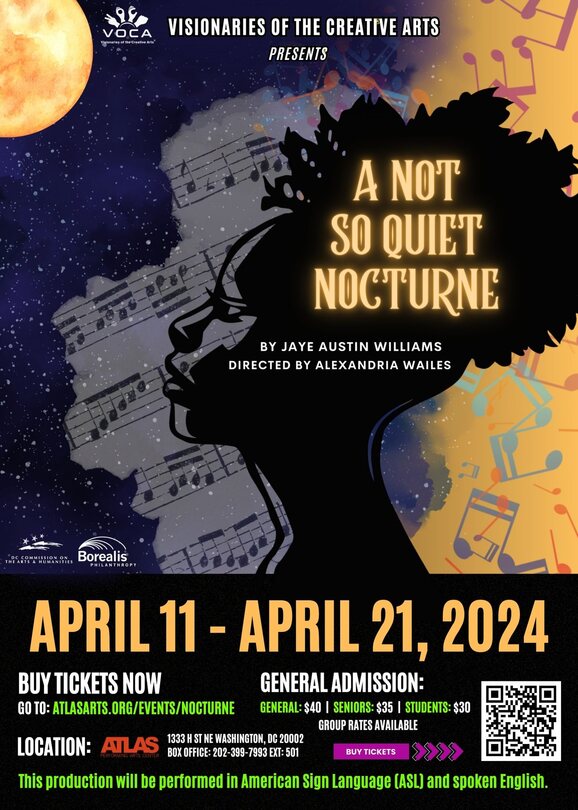

It is the early 1990s in New York City, a decade into the horrific AIDS epidemic. Far beneath the national radar’s concern for the massive deaths of vital, young white men within the gay community, and the anxious, lingering myths and unknowns about the disease, Black, poor folks of all persuasions are suffering and dying at proportionately higher rates – and intergenerationally. Such is the case for Charlyn, a young, Black, Deaf woman who has contracted the disease from her husband, who has now died. She has also just buried their infant daughter, Catherine. We meet Charlyn at Catherine’s gravesite, speaking to her daughter who will never grow up. As we flash backward and forward between Charlyn’s memories of the joys and struggles within the “bare life” that she, her family and friends have navigated, and the present, we witness Charlyn’s blossoming through an unbearable confrontation with her own mortality, as she tries to go on living the unlivable for as long as she possibly can.